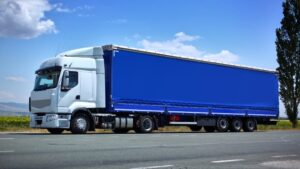

A huge fire in a transport company in Drogobycz. A great loss, and the owner faces a complicated process of obtaining compensation for burnt vehicles and even more difficult in terms of satisfying the owners of damaged loads.
On December 25, 2022, four sets burned completely on the premises of a transport company in Drogobycz, and another two were seriously damaged. Assuming that the vehicles belonged to one entrepreneur, and the semi-trailers were filled with goods belonging to third parties, the owner has a long and winding road to obtain compensation for the vehicles and an even more difficult one in terms of paying compensation to the owners of the goods.
I do not know the cause of the fire, but the following insurances should be used in the case:
- Voluntary autocasco insurance for all burned vehicles of the same owner. ATTENTION! The OC ppm does not apply here because in accordance with art. 38 sec. 1 point 1 of the Act on compulsory insurance, the insurance company is not liable for property damage caused "to itself".
- Liability insurance of a road carrier in domestic and international traffic - for burnt goods on all vehicles belonging to the same owner. The average guarantee sum in TPL insurance in international traffic is EUR 300,000/400,000, is it enough?
ATTENTION! The OC ppm does not apply here because in accordance with art. 38 sec. 1 point 2 of the Act on compulsory insurance, the insurance company is not liable for damage to cargo transported for a fee.
- If, apart from the first vehicle that caused the fire (e.g. self-ignition), the other vehicles belong to other owners, they will be able to take advantage of third party liability insurance for motor vehicle owners - the owner of the first truck. They will also recover compensation for burnt goods from this insurance.
Pursuant to the Act on Compulsory Insurance UFGiPBUK, the guarantee sum in the event of damage to property is EUR 1,050,000. Is that enough?
- If the fire occurred as a result of the first vehicle being set on fire by unknown perpetrators, and then the fire spread to the others, the owner of the first truck may evade liability for damage to other sets and loads belonging to third parties, citing exonerative grounds. Namely, that the damage was caused by a third party for which the owner of the motor vehicle is not responsible.
It follows from the above that determining the cause of the fire is of key importance for the emergence of liability and activation of insurance, as well as for the possible evasion of liability by the owner of the vehicle or the owner of the transport base. In order not to complicate the matter even more, I do not discuss the issue of business liability insurance.
Legal adviser Jerzy Klimkowski